Understanding Modern Robotics Through Technical Insight
RoboLens is an independent educational platform explaining how AI-powered robots work, from miniature social companions running Hugging Face models to large-scale autonomous systems navigating warehouses. We compare research output and funding strategies across the US, China, and other leading countries — presenting engineering fundamentals, hardware trade-offs, and market dynamics without vendor promotion or investment advice.
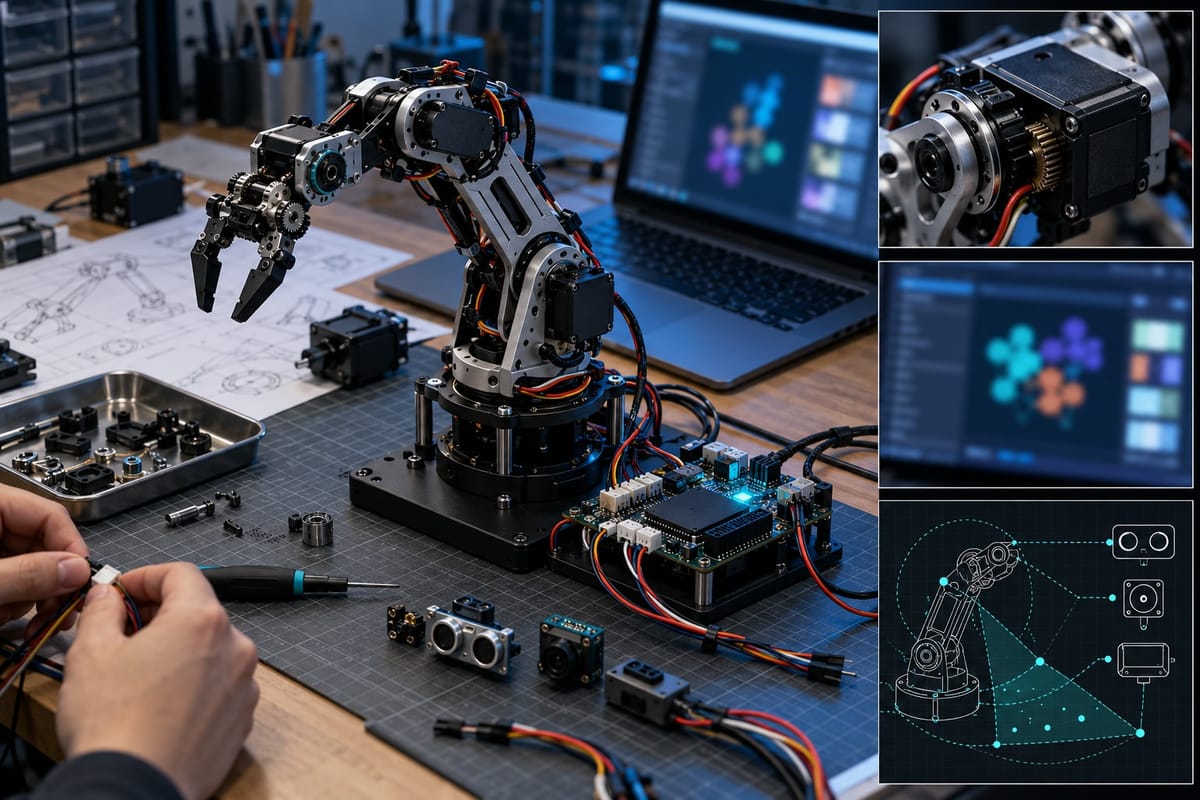
What RoboLens Covers
Three interconnected areas where robotics research, industrial implementation, and national strategy meet.
Latest Articles
Recent explorations of robotics hardware, software, and the global landscape shaping where the field is heading.

Which Countries Lead in Robotics Research Publications?
China, the United States, and Japan dominate robotics research publications, but their strengths differ sharply: China leads in volume and manufacturing applications, the US in AI-driven autonomy, Japan in manipulation dexterity, Germany in industrial integration, and South Korea in humanoid platforms.
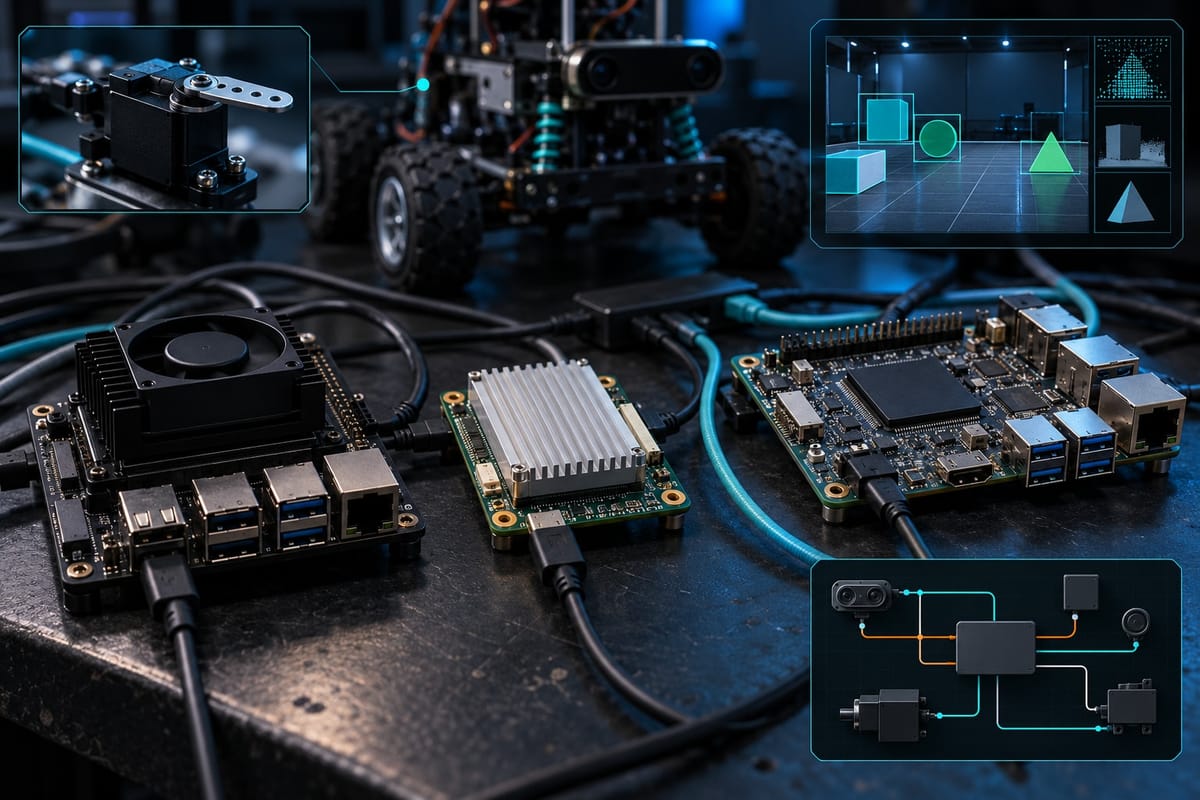
Edge Inference: Running Vision Models on Robot Hardware
Choosing the right edge compute platform for vision-based navigation means balancing power, latency, and thermal constraints. This guide walks through the three most popular options and their real-world performance.

How US Federal Robotics Funding and China's Industrial Policy Shape Which Projects Get Built
The United States funds curiosity-driven research through competitive peer review, while China deploys state capital to accelerate deployment at scale. These structural differences determine which robotics projects survive the journey from prototype to production.
How Countries Approach Robotics
Research priorities, industrial focus, and government support models vary widely. Each region emphasizes different applications and commercialization paths.
US robotics research spans university labs, defense-funded initiatives, and venture-backed startups. Federal programs like the National Robotics Initiative prioritize human-robot collaboration, logistics automation, and assistive technologies. Commercial deployment centers on warehouse fulfillment, last-mile delivery, and specialized tasks in unstructured environments.
Strengths include software ecosystems (ROS, simulation tools), sensor integration, and rapid prototyping culture. Challenges involve fragmented funding, shorter commercialization timelines, and less emphasis on heavy industrial robotics compared to manufacturing-focused regions.
China's robotics strategy ties closely to industrial policy goals: domestic supply chain development, manufacturing automation, and technology self-sufficiency. Government funding flows through provincial innovation zones, state-owned research institutes, and targeted subsidies for robotics manufacturers.
Publication output has grown rapidly in computer vision, manipulation, and mobile robotics. Industrial focus remains on factory automation, logistics, and service robots for public spaces. The sector benefits from integrated supply chains for motors, sensors, and electronics, though gaps remain in high-precision actuators and specialized software.
Japan leads in humanoid research, manipulation dexterity, and disaster response robots, with strong collaboration between universities and manufacturers like Fanuc and Kawasaki. Germany dominates industrial robotics through companies like KUKA and Franka Emika, emphasizing precision, safety standards, and factory integration.
South Korea invests heavily in humanoid platforms, wearable exoskeletons, and service robots for aging populations. Research output concentrates in Seoul and Daejeon, supported by government innovation funds. Each country's robotics direction reflects broader economic priorities and existing industrial strengths.
Common Misunderstandings About Modern Robotics
Media coverage and marketing hype often misrepresent how robotics technology actually works and where the field stands today.
- Risky
«Robots are fully autonomous»
Most deployed robots operate within narrow, structured tasks with significant human oversight. Warehouse robots follow mapped routes; manipulation systems work in controlled lighting and object sets. True general-purpose autonomy remains a research challenge, not a commercial reality.
Evaluate robotics claims by asking what environmental constraints, predefined maps, or human intervention the system requires to function reliably.
- Costly
«AI models run the same on robots as on cloud servers»
Edge hardware imposes strict constraints on model size, inference speed, and power consumption. A language model running smoothly on a desktop GPU may be too slow or memory-intensive for an embedded ARM processor. Edge deployment requires quantization, pruning, or switching to smaller architectures.
When evaluating robot AI capabilities, check which chip it uses (Jetson, Coral, RK3588) and whether the model has been optimized for that hardware's memory and compute limits.
- Minor
«Boston Dynamics robots represent the state of the industry»
Boston Dynamics showcases advanced legged locomotion research, but most commercial robots use simpler wheeled or tracked bases for reliability and cost reasons. The industry as a whole prioritizes task completion over gymnastic mobility.
- Costly
«One country «leads» in robotics overall»
Leadership depends on the metric: publication count, patents filed, units deployed, revenue, or specific application areas. Japan excels in manipulation, Germany in industrial precision, the US in software ecosystems, China in manufacturing volume. Blanket rankings obscure these distinctions.
Compare countries within specific robotics subfields (humanoids, logistics, research output) rather than seeking a single global leader.
Robotics at a Glance
- 3 themesMini AI robots, large systems, cross-border comparisons
- 5 countriesRegular coverage: US, China, Japan, Germany, South Korea
- Edge + cloudAI deployment models analyzed for hardware trade-offs
- 0 affiliationsNo manufacturer partnerships or investment ties
Content structure defined in RoboLens editorial strategy and verified association registration status
Frequently Asked Questions
Where does RoboLens get its technical information?
Articles draw on published research papers, manufacturer technical documentation, open datasets, and publicly available policy documents. We cite sources and link to original materials where possible. RoboLens does not conduct proprietary testing or have access to unpublished data.
Is RoboLens affiliated with any robotics company?
No. RoboLens is an educational project of a Croatian non-profit association focused on technical literacy and computer history. We receive no funding from manufacturers, do not promote products, and maintain editorial independence.
Can I link to RoboLens articles in my course materials?
Yes. Articles are published for educational use. You may link to them in syllabi, assignments, or course websites. If you plan to reproduce substantial portions of text, contact us to discuss appropriate attribution.
Why is a Croatian association writing about US and Chinese robotics?
Robotics is a global field, and educational analysis does not require geographic proximity to the subjects covered. The association's mission is to promote technical literacy and document technology history, regardless of where developments occur. Registration in Croatia reflects the founders' location, not the scope of coverage.
What does «educational purposes only» mean here?
Content is provided to explain how robotics technology works and how different countries approach the field. It is not investment advice, product recommendations, or professional engineering consultation. Readers should verify information independently before making decisions based on it.
How do you handle corrections if an article has an error?
We update articles when factual errors are identified and note corrections at the end of the piece. If you spot an inaccuracy, contact us with the specific claim and supporting evidence. We prioritize corrections that affect technical understanding or misrepresent research findings.
Do you offer RSS or email updates?
Not currently. Check the articles page periodically for new content, or bookmark specific topics of interest.
Start Exploring Robotics Technology
Read technical breakdowns, compare international research strategies, and build a grounded understanding of where AI-powered and autonomous systems stand today.